


Shadbala is a traditional system used in Vedic astrology to assess the strength of planets in a birth chart. The word “Shadbala” comes from two Sanskrit terms: “Shad,” meaning six, and “Bala,” meaning strength. It evaluates planetary power through six different forms of strength rather than relying only on a planet’s sign or house placement.
A planet may appear well placed but lack strength in other areas. Another planet may occupy a challenging position yet gain support through direction, timing, motion, or aspects. Shadbala helps an astrologer study these differences in a more structured way.
For anyone considering a Vedic astrology consultation in Dubai, Shadbala can provide additional depth when interpreting career, relationships, health, finances, education, property, and important life periods.
In Vedic astrology, planets represent different functions and areas of life. The Sun may relate to confidence, authority, vitality, and leadership. The Moon is connected with emotions, mental patterns, care, and adaptability. Mars represents courage, action, competition, and physical drive, while Mercury relates to communication, learning, analysis, and business.
The strength of a planet can affect how effectively it expresses these qualities. A strong planet may be better positioned to deliver the results associated with the houses it rules and occupies. A weaker planet may show delays, uncertainty, struggle, or the need for greater effort.
Strength does not automatically mean that a planet will produce only favorable results. A strong functional malefic may strongly express challenging themes, while a weak benefic may struggle to provide its full support. The planet’s role in the individual chart must always be considered.
Shadbala is therefore one part of a complete interpretation, not a standalone prediction tool.
The six main components of Shadbala are:
Each component examines a different condition. Together, they create a broader picture of how capable a planet may be within a particular birth chart.
The calculation involves traditional rules and numerical values. An astrologer may compare the total strength of a planet with the minimum required strength prescribed for that planet. However, a high score should not be interpreted without checking the planet’s sign, house ownership, dignity, aspects, conjunctions, and planetary periods.
Sthana Bala refers to positional strength. It examines how strong a planet is because of the sign, house, divisional charts, and other positional factors connected with it.
Sthana Bala includes several sub-components:
Uccha Bala considers how close a planet is to its exaltation point. A planet near exaltation may receive greater positional support, while one near debilitation may receive less through this particular measure.
Saptavargaja Bala evaluates a planet’s placement across selected divisional charts. Divisional charts are used to examine specific areas of life in greater detail. For example, the Navamsa chart is often reviewed alongside the birth chart when studying planetary dignity and relationships.
Kendradi Bala considers whether a planet is placed in an angular, succedent, or cadent house. Planets in angular houses may receive greater strength through this factor.
Sthana Bala is important because a planet’s sign placement alone does not tell the entire story. Its position across different chart divisions may provide additional support or weakness.
Dig Bala means directional strength. It assesses whether a planet gains strength by occupying a direction or house associated with its natural expression.
The four angular houses are particularly important for Dig Bala:
Different planets are traditionally considered to gain directional strength in different positions. For example, the Sun and Mars are associated with greater Dig Bala in the tenth house, where action, authority, visibility, and achievement are emphasized. Jupiter and Mercury are traditionally associated with the ascendant, while the Moon and Venus gain directional strength in the fourth house. Saturn is generally associated with the seventh house for this calculation.
The purpose is not to say that a planet is good or bad simply because of its direction. Dig Bala shows whether the planet’s placement gives it a position from which it can express its qualities more effectively.
A planet with strong Dig Bala may become more visible in the relevant area of life, especially when supported by other chart factors.
Kala Bala is temporal strength. It evaluates the influence of time, including the day, night, season, lunar phase, year, month, hour, and other traditional time divisions at the moment of birth.
Kala Bala may include several sub-components, such as:
Some planets are considered stronger during the day, while others gain support at night. Benefic and malefic planets may also respond differently to lunar phases. The birth season and the Sun’s movement are included in certain calculations.
This means that a planet’s strength is not viewed as completely static. The time of birth contributes to the conditions under which the planet operates.
Kala Bala is especially useful when two planets appear similar by sign and house but differ in their relationship with the birth time. It can help explain why one planet seems more capable of expressing its influence.
Cheshta Bala is motional strength. It primarily considers a planet’s movement and apparent motion in relation to Earth.
Retrograde planets often receive significant Cheshta Bala because their apparent motion is different from the usual direct movement. This does not automatically make a retrograde planet favorable or unfavorable. It may indicate that the planet’s themes become more internalized, intensified, unusual, delayed, or repeatedly revisited.
The Sun and Moon are treated differently because they do not become retrograde in the same way as the visible planets. Calculations may also consider planetary speed and certain motion-related conditions.
Cheshta Bala can show that a planet has strong capacity to act, but the way that strength manifests depends on the planet’s nature and chart position. A strongly placed retrograde Saturn, for example, may express persistence and responsibility in a distinctive way. A retrograde Mercury may emphasize revision, analysis, rethinking, or a non-linear communication style.
The complete chart is required before drawing conclusions.
Naisargika Bala means natural strength. Unlike the other forms, it is based on the inherent or natural strength assigned to the planets.
The traditional order generally gives the greatest natural strength to the Sun, followed by the Moon, Venus, Jupiter, Mercury, Mars, and Saturn. This does not mean that the Sun will always produce the best results or that Saturn will always be weak in an individual chart.
Naisargika Bala is a fixed reference point. It recognizes that planets have different inherent levels of brightness, visibility, influence, or capacity within the traditional system.
This factor is combined with the other five forms. A planet with lower natural strength may still become powerful through excellent placement, direction, aspects, timing, or dignity. Similarly, a planet with high natural strength may cause difficulty if it rules challenging houses or is heavily afflicted.
Drik Bala is aspectual strength. It considers the influence that planets receive through aspects from other planets.
Benefic aspects may support a planet by providing guidance, protection, opportunity, or constructive expression. Difficult aspects may create pressure, conflict, delay, fear, responsibility, or transformation.
The result depends on the planet casting the aspect, the planet receiving it, the houses involved, and the broader chart. A challenging aspect may still produce discipline or achievement when the person responds constructively.
Drik Bala should not be reduced to a simple count of positive and negative aspects. The dignity, functional role, conjunctions, sign ownership, and planetary periods must also be examined.
A planet may receive support from one source and pressure from another. This creates mixed results, which are common in real birth charts.
After calculating the six components, the astrologer totals them to estimate the planet’s overall strength. The result may be compared with traditional minimum requirements for that planet.
However, the highest numerical score does not always represent the most important planet in a person’s life. Interpretation should also consider:
A strong planet ruling the sixth, eighth, or twelfth house may strongly express themes involving service, competition, transformation, expenses, research, or withdrawal. A weak planet ruling an important house may show an area where the person needs greater patience and conscious effort.
Strength explains capacity. It does not, by itself, decide whether the outcome will be comfortable or difficult.
Planetary strength becomes especially relevant during the dasha or sub-period of that planet. If a strong planet begins its period, the matters of the houses it rules and occupies may become more active. The results may be constructive, demanding, or mixed depending on the planet’s complete condition.
A weak planet may also produce important events during its dasha. Its period may bring attention to unresolved responsibilities, delays, lessons, or changes connected with its houses.
Transits provide another layer of timing. The movement of Jupiter, Saturn, Rahu, Ketu, and other planets may activate natal placements or influence important houses.
Shadbala should therefore be used alongside dasha analysis and transits rather than as a replacement for timing techniques.
Some practitioners compare planetary strength with the environment in which a person lives or works. This is where an Astrovastu approach may be considered. It combines birth-chart factors with traditional Vastu observations about a property.
This does not mean that a planetary score alone determines the design of a home. Direction, layout, natural light, ventilation, structure, and household use still require separate assessment.
A chart-based approach may be used to personalize recommendations, but it should not replace architectural, engineering, medical, financial, or professional advice.
Shadbala and residential Vastu examine different areas. Shadbala measures planetary strength in a birth chart, while residential Vastu reviews the design, orientation, use, and condition of a property.
If someone wants to assess a home’s entrances, rooms, stairs, water features, or layout, a residential Vastu review is more directly relevant. The two systems may be combined by practitioners, but they should not be confused.
A strong planet in a chart does not automatically make every property suitable. Likewise, a Vastu concern cannot be diagnosed only by looking at Shadbala.
A Shadbala analysis may be useful when a person wants a deeper understanding of planetary capacity in relation to career, relationships, education, finances, health, property, or major life transitions.
Provide the most accurate birth date, time, and place available. The chart should be calculated consistently, and the astrologer should explain the method being used.
A responsible interpretation should avoid presenting one score as a guaranteed prediction. It should explain both strengths and limitations, identify the relevant life areas, and connect the result with planetary periods and the rest of the chart.
For combined guidance involving traditional astrology, numerology, or Vastu, the methods should be explained separately before being brought together.
Shadbala means “sixfold strength.” It is a system used to assess planetary strength through positional, directional, temporal, motional, natural, and aspectual factors.
No. A high score means the planet has greater capacity to express itself. Its results still depend on house ownership, sign, aspects, conjunctions, dignity, dashas, and the planet’s functional role.
No single component should be considered sufficient on its own. The six forms are combined and interpreted with the complete birth chart.
Shadbala does not predict an event by itself. It helps assess planetary capacity, while dashas, transits, yogas, and house connections are used for timing and interpretation.
Not always. A basic reading may not require detailed calculations, but Shadbala can provide additional insight when planetary strength is central to the question.
Shadbala offers a structured way to understand how much strength a planet may possess in a Vedic birth chart. It examines position, direction, time, motion, natural influence, and aspects instead of relying on a single placement.
The final interpretation should connect the score with house ownership, sign dignity, divisional charts, dashas, transits, and the person’s actual circumstances. A strong planet may produce powerful results without guaranteeing that every result is easy, while a weaker planet may still become meaningful through effort, timing, and support from other chart factors.
If you want to discuss your birth chart or request a detailed astrological review, you can contact Vedic Vastu Dubai for further guidance.


 " alt="What Does a Hidden Passion Number Reveal in Numerology?">

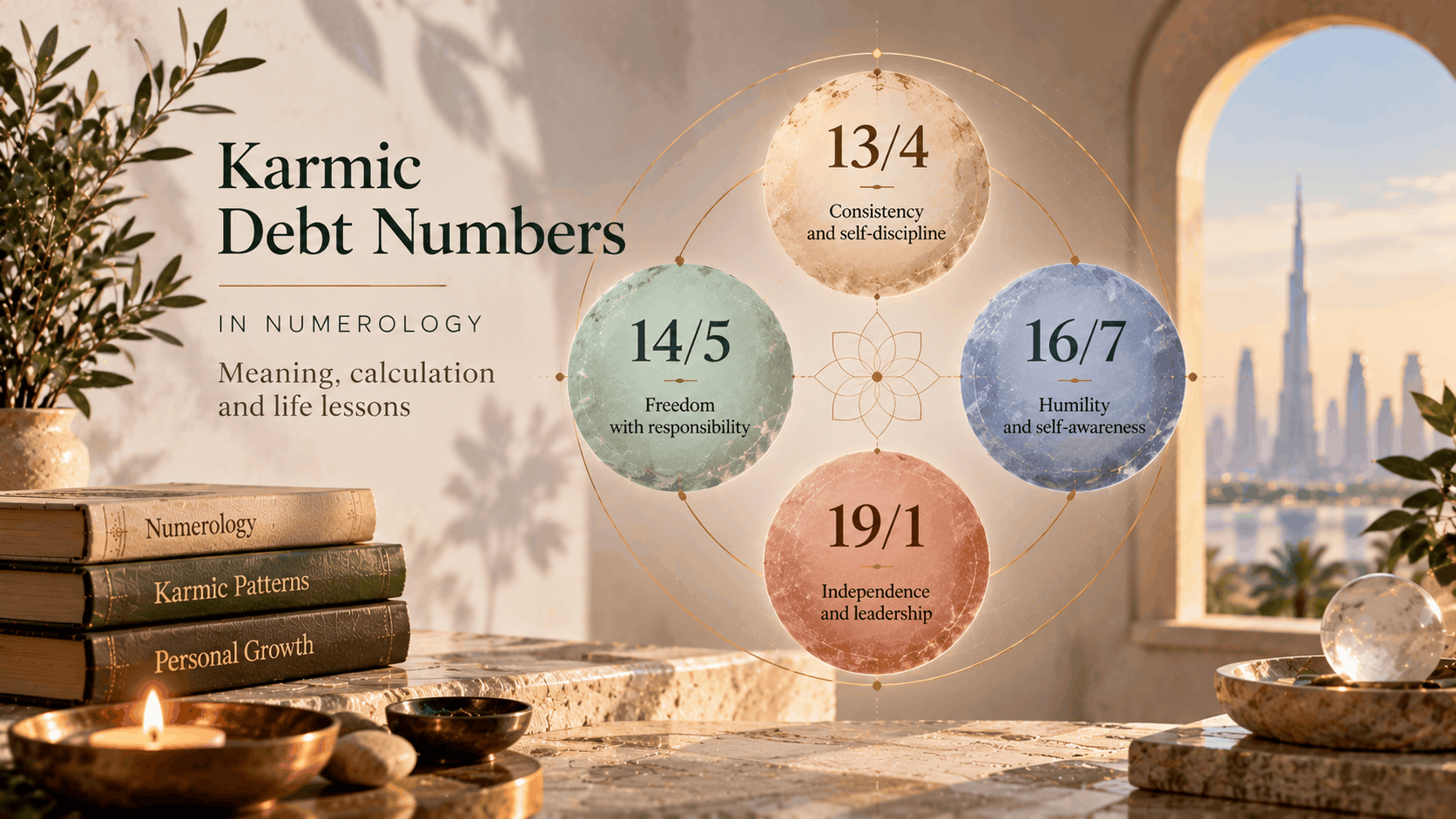 " alt="What Are Karmic Debt Numbers in Numerology?">
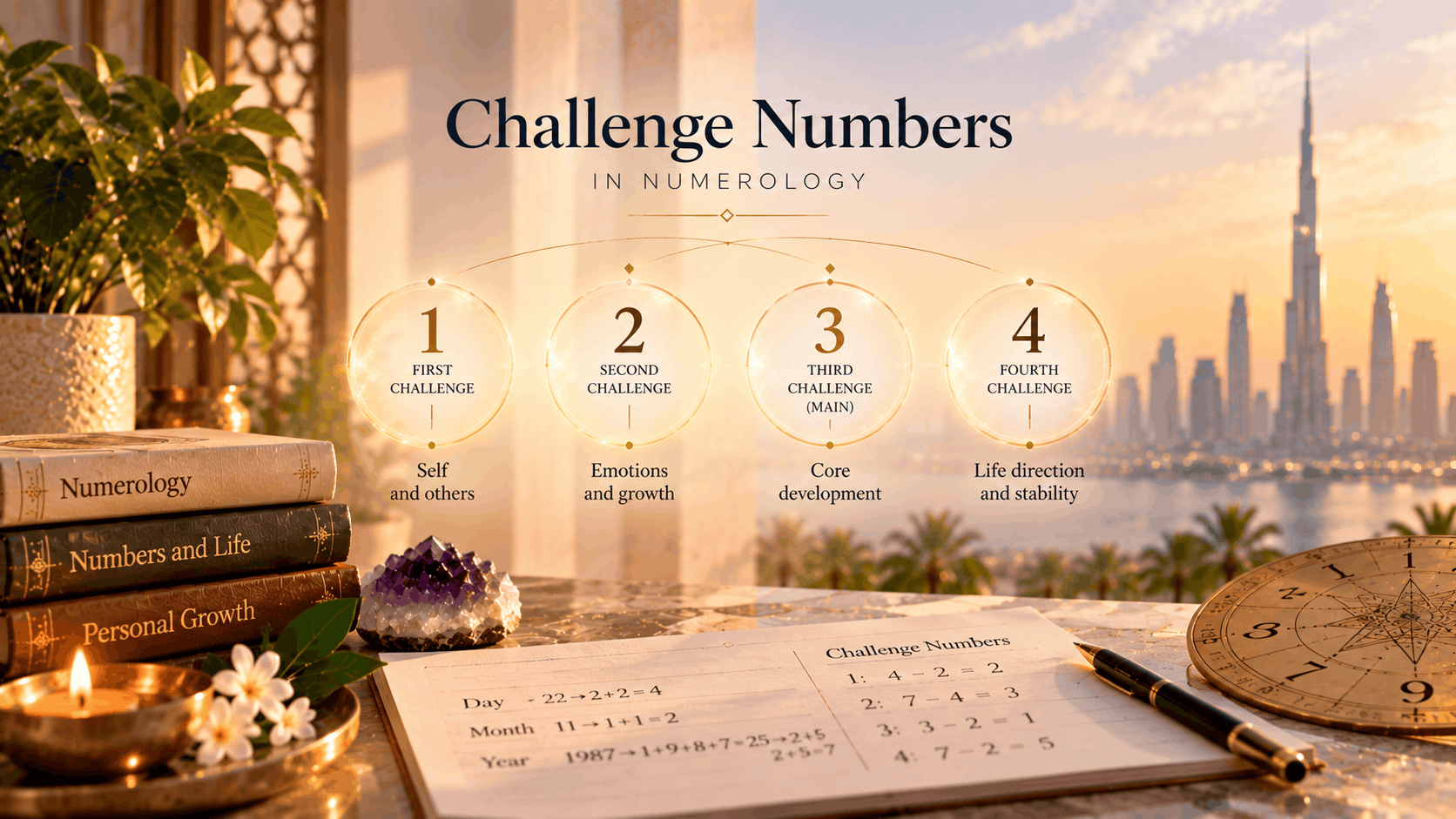 " alt="How Are Challenge Numbers Calculated in Numerology?">
 " alt="What Is a Numerology Maturity Number and When Does It Become Relevant?">