

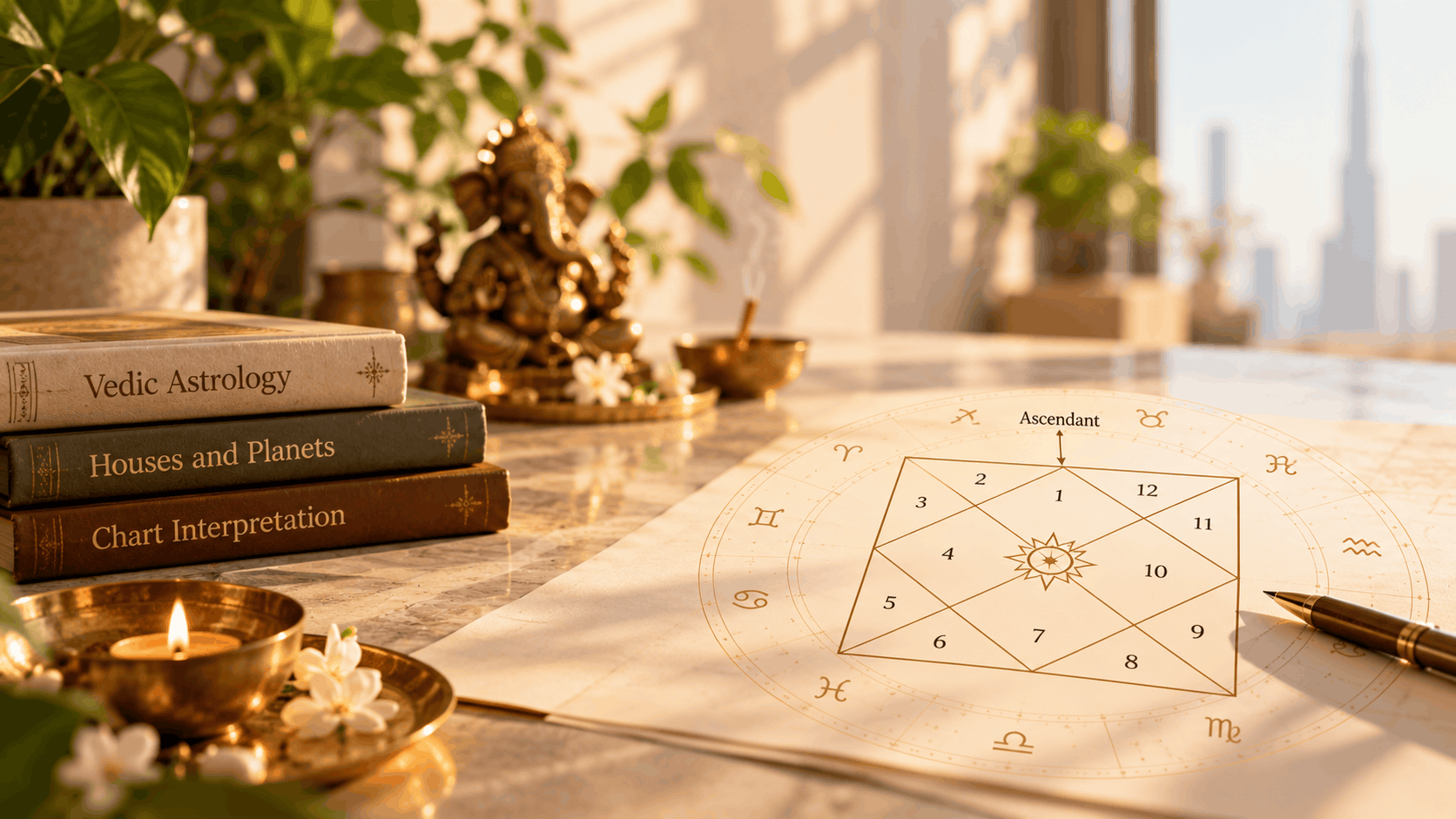
In Vedic astrology, a house lord is the planet that rules the zodiac sign placed in a particular house of a birth chart. Each of the twelve houses represents a different area of life, while the planet ruling the sign in that house becomes its lord.
The house lord helps show how that area of life may operate, where its results may appear, and which planetary influences affect it. For example, the lord of the second house can provide information about wealth, speech, family values, and food habits. The lord of the tenth house is studied for career, responsibilities, reputation, and professional direction.
However, a house lord should never be interpreted alone. Its placement, strength, dignity, aspects, conjunctions, house ownership, divisional-chart position, and planetary timing all contribute to a complete reading. Anyone seeking a Vedic astrology consultation in Dubai should therefore have the entire birth chart reviewed rather than focusing on one planet or one prediction.
A Vedic birth chart is divided into twelve houses. Each house begins in a particular zodiac sign, depending on the ascendant or rising sign. Every zodiac sign is ruled by a planet, and that ruling planet becomes the lord of the house where the sign is placed.
For example, suppose a person has Aries rising. Aries is ruled by Mars, so Mars becomes the first-house lord. The second house for this chart may fall in Taurus, which is ruled by Venus. Venus therefore becomes the second-house lord.
The house lord may be located in another house. This creates a connection between the house it rules and the house where it sits. If the tenth-house lord is placed in the seventh house, career may become connected with clients, partnerships, public dealings, or business relationships.
This does not mean one fixed event must happen. It shows a relationship between areas of life that requires further interpretation.
To identify a house lord, an astrologer generally follows three steps:
The classical planetary rulerships used in Vedic astrology are:
Rahu and Ketu are important shadow planets in chart interpretation, but they do not traditionally rule zodiac signs in the same way as the seven classical planets.
The exact house positions may vary depending on the chart calculation method. This is why an accurate birth date, time, and place are important when preparing a Vedic chart. Even a small difference in birth time can sometimes change the ascendant or the house placements.
The ascendant lord is the planet ruling the rising sign. It is often treated as one of the most important planets in a birth chart because the ascendant represents the individual’s physical presence, outlook, identity, general vitality, and approach to life.
The position of the ascendant lord can show where a person directs energy and attention. If it is placed in the tenth house, professional identity may become important. If it is placed in the fourth house, home, family, emotional security, or property may receive greater attention.
Its strength is also reviewed. An ascendant lord placed in a favorable sign, supported by benefic planets, and positioned in a strong house may function differently from one that is debilitated, heavily afflicted, combust, or placed in a difficult house.
This does not mean that a difficult placement guarantees failure. It may indicate areas requiring maturity, patience, discipline, or conscious effort.
A house lord creates a bridge between the house it owns and the house where it is placed. This is one of the main reasons astrologers study it carefully.
Consider the following examples:
These combinations are not interpreted as isolated promises. The astrologer must also check the planets involved, the signs, aspects, conjunctions, nakshatras, divisional charts, and current planetary periods.
A house lord shows a potential relationship. The complete chart helps determine how strongly and constructively that relationship may express itself.
The house where a planet is placed shows the environment through which the results of its owned houses may be experienced. For instance, if the lord of the sixth house is placed in the tenth house, work may involve service, competition, problem-solving, health matters, employees, or demanding responsibilities.
The interpretation changes according to the planet. Mars, Venus, Saturn, Mercury, Jupiter, the Sun, and the Moon each express themselves differently. The sign and house placement modify that expression further.
A house lord in an angular house, such as the first, fourth, seventh, or tenth, may become more visible in life. A placement in a trinal house, such as the first, fifth, or ninth, may be studied for support, intelligence, belief, creativity, or fortune.
Planets placed in the sixth, eighth, or twelfth houses require more nuanced analysis. They may indicate challenges, transformation, service, expenses, isolation, research, or spiritual development, depending on the complete chart.
Knowing the house lord is only the beginning. Its strength determines how effectively it can represent the house it owns.
Astrologers may assess strength through:
A strong planet may help the matters of the house develop with greater stability. A weak or afflicted planet may require more effort or may produce results in irregular ways.
Even a planet placed in a challenging house can produce useful outcomes when it is strong, well-supported, or connected with favorable yogas. This is why a simple statement such as “your house lord is in the eighth house” is not enough to understand a chart.
A house lord is the planet ruling the sign placed in a house. A planet in a house is any planet physically located in that house at the time of birth. These may be different planets.
For example, if Taurus occupies the tenth house, Venus is the tenth-house lord because Venus rules Taurus. If Saturn is physically placed in the tenth house, Saturn becomes an occupant of the tenth house, but it is not necessarily the tenth-house lord.
Both factors are important. The house lord shows the planet responsible for the house, while the occupant directly influences the house through its nature, aspects, and condition.
If the house lord and an occupying planet are together, their energies interact. If they are in mutual aspect or exchange signs, the connection may become stronger. Each situation requires a complete chart interpretation.
Planetary aspects can support, challenge, or modify the results of a house lord. In Vedic astrology, Jupiter, Saturn, Mars, and other planets have specific aspect patterns that must be considered.
A benefic influence may provide guidance, growth, protection, or support. A difficult influence may create pressure, delay, conflict, responsibility, or transformation. However, the nature of the aspect depends on the planet, its strength, its functional role, and the house involved.
Conjunctions also matter. A house lord joined with another planet may combine the themes of both planets. The result may be constructive, demanding, or mixed.
For example, the tenth-house lord joined with Mercury may connect career with analysis, business, communication, writing, or technology. If the same planet is joined with Saturn, the person may experience responsibility, structured work, delay, persistence, or long-term professional development.
No single conjunction should be treated as a complete prediction.
A house lord may remain relatively quiet in one period and become more noticeable during another. Vedic astrology uses planetary dashas, especially the Vimshottari Dasha system, to study periods associated with different planets.
When the dasha or sub-period of a house lord operates, the matters of the houses it owns and the house where it is placed may receive greater attention. Events may involve career, relationships, education, family, finances, health, travel, or personal decisions, depending on the planet.
Transits are also reviewed. The movement of Jupiter, Saturn, Rahu, and Ketu over important houses or natal planets may coincide with periods of change or increased focus.
Timing should be assessed only after the natal promise is understood. A transit does not create every possible result by itself. It may activate or emphasize themes already present in the birth chart.
Some practitioners combine birth-chart interpretation with property and space analysis through an Astrovastu approach. This may involve reviewing a person’s chart alongside the orientation, layout, use, and condition of a home or workplace.
An Astrovastu review should not replace architectural, structural, electrical, or safety advice. Its purpose is to consider the relationship between the individual, the property, and traditional astrological or Vastu principles.
The house lord in a birth chart does not automatically determine which room a person must use. Any recommendation should be based on the complete chart, the property’s actual layout, household needs, and practical limitations.
A house-lord analysis may be useful when someone wants to understand recurring patterns or important life areas such as career, marriage, finances, education, property, health, or family responsibilities.
Prepare the correct birth date, exact birth time if available, and birthplace. Explain the area of life you want to understand, but avoid providing only a desired conclusion. A responsible astrologer should explain the reasoning, acknowledge uncertainty, and avoid fear-based claims.
An integrated Vedic astrology and numerology consultation may be considered when someone wants to review several traditional systems together. The methods should remain clearly explained rather than presented as guaranteed outcomes.
A house lord is the planet that rules the zodiac sign occupying a particular house in a birth chart. It represents the matters of that house and connects them with its own placement.
The ascendant lord is highly important because it relates to identity, vitality, and life direction. However, the most relevant house lord depends on the question being studied.
No. A weak house lord may indicate areas requiring effort, but aspects, conjunctions, divisional charts, planetary periods, and other supportive factors can change the interpretation.
Not necessarily. The house lord rules the sign in the house, while an occupant is a planet physically placed there. Both are assessed separately.
Transits may activate or emphasize themes connected with a house lord, but they should be interpreted with the birth chart and planetary dashas. A transit alone does not determine a fixed outcome.
A house lord provides an important link between different areas of a Vedic birth chart. It helps astrologers understand how the themes of one house may express themselves through another house, planet, sign, or period.
Its meaning depends on more than ownership. Placement, strength, dignity, aspects, conjunctions, divisional charts, dashas, and transits all contribute to the interpretation. The same house lord can produce different experiences for different people because every birth chart has its own structure.
A careful reading should therefore explain patterns and possibilities rather than make isolated or absolute predictions. When studied in context, the house lord becomes a useful tool for understanding the chart’s priorities, challenges, connections, and timing.


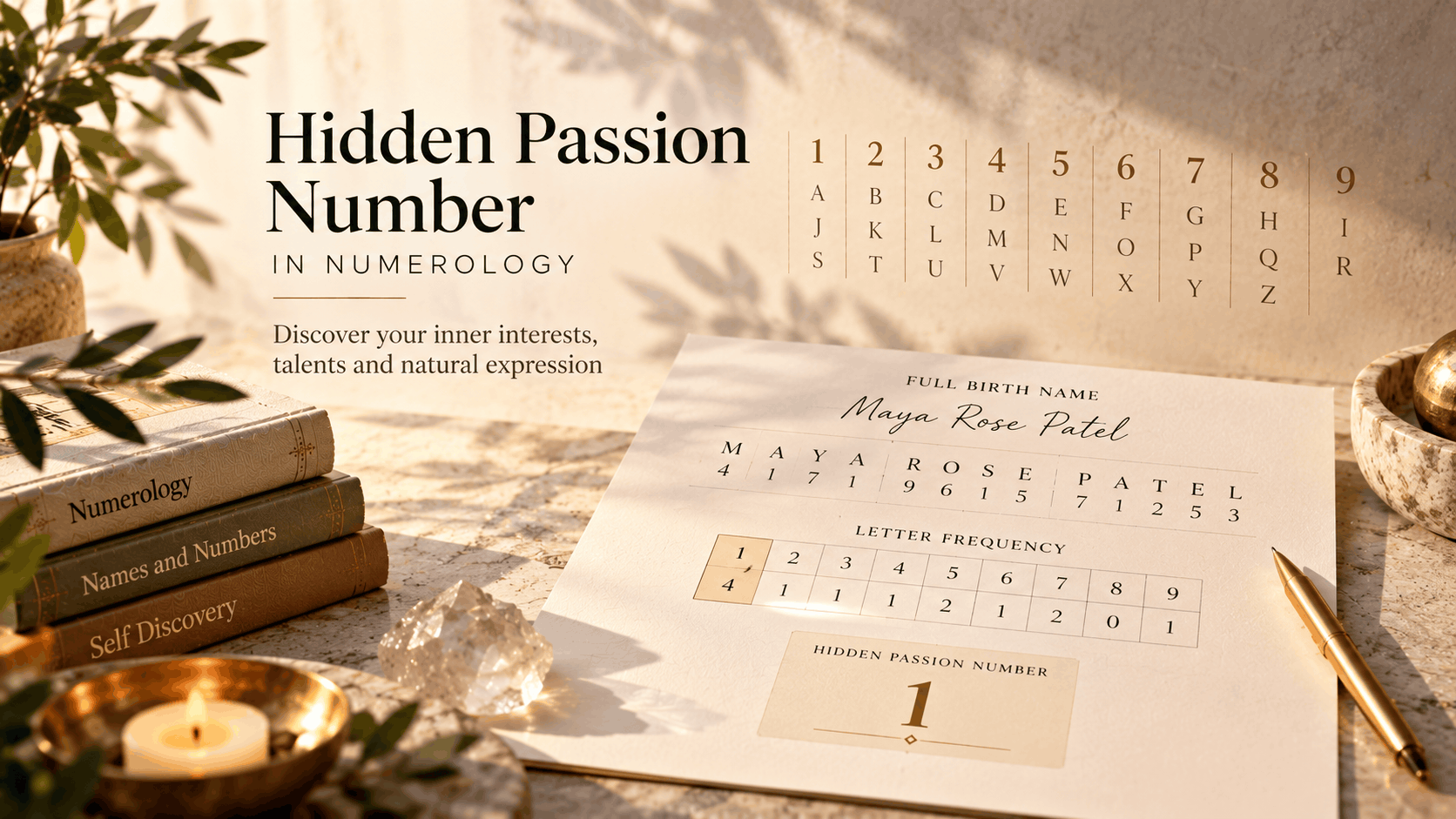 " alt="What Does a Hidden Passion Number Reveal in Numerology?">

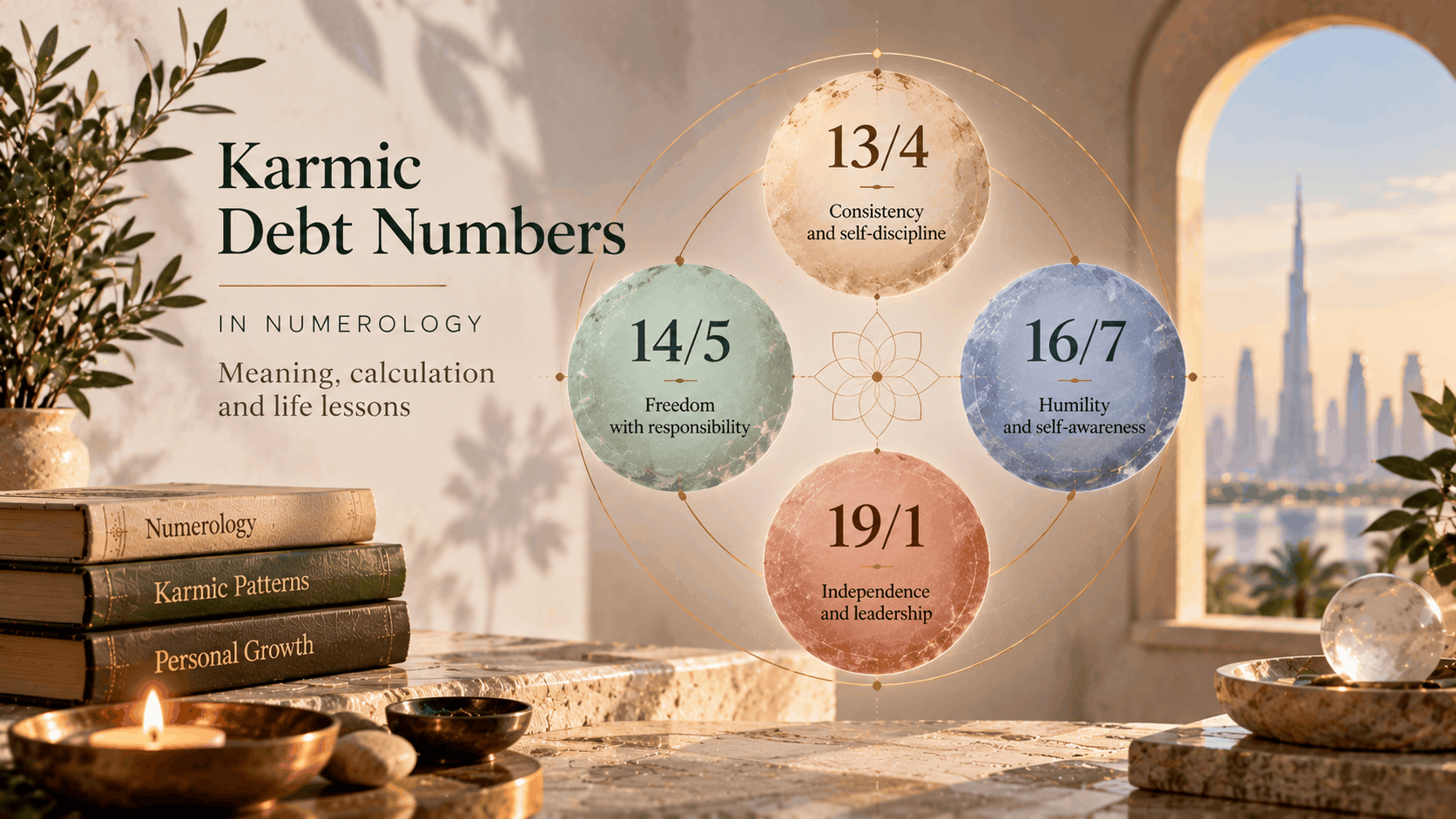 " alt="What Are Karmic Debt Numbers in Numerology?">
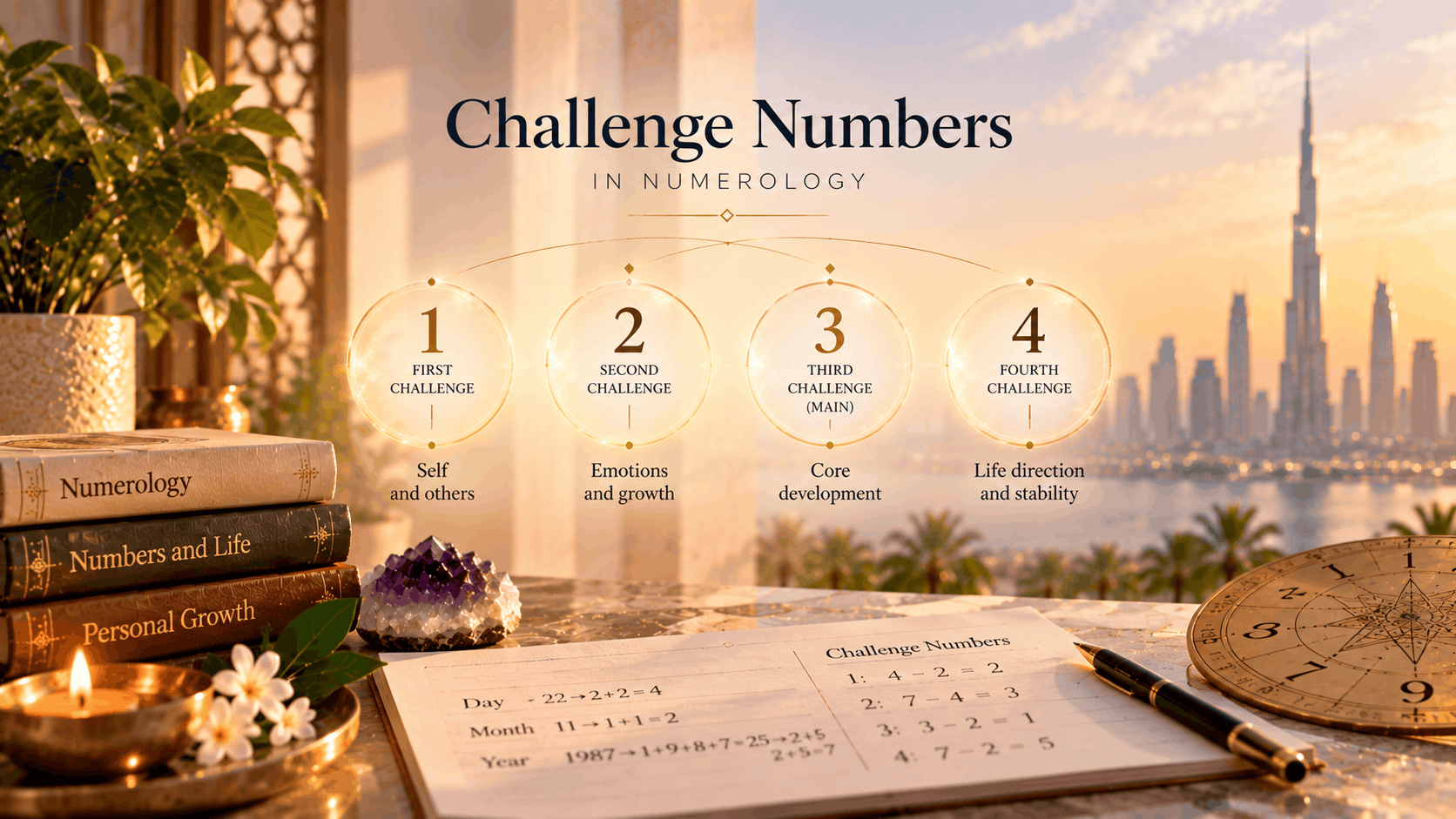 " alt="How Are Challenge Numbers Calculated in Numerology?">
 " alt="What Is a Numerology Maturity Number and When Does It Become Relevant?">