

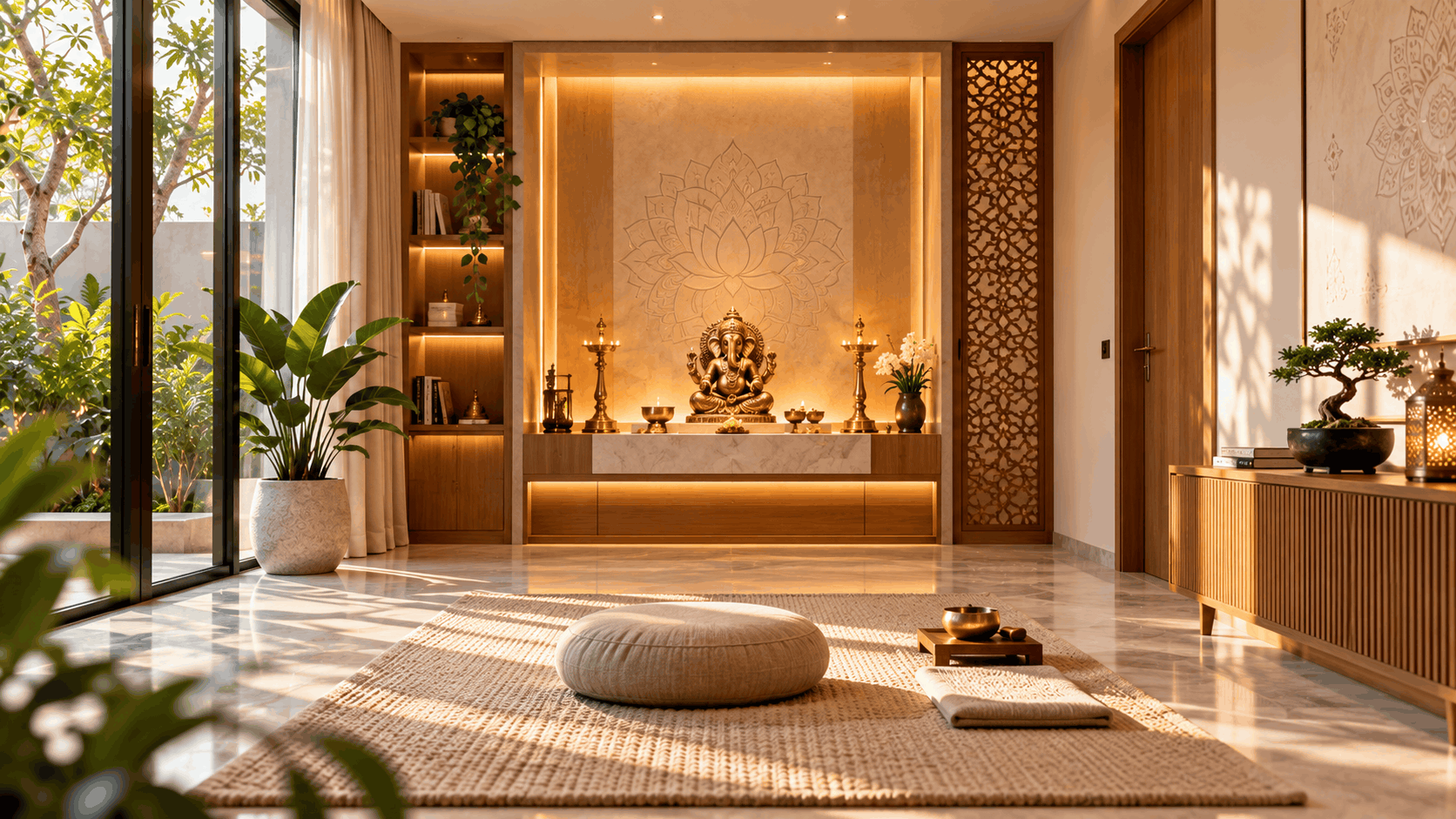
A dedicated prayer and meditation room should feel peaceful, clean, private, and easy to use. Vastu considers its direction, location, proportions, entrance, seating arrangement, storage, lighting, ventilation, and relationship with the rest of the home.
A prayer area and a meditation area may share the same room, but they do not always have identical needs. Prayer may involve an altar, lamps, religious objects, and regular family gatherings. Meditation may require quiet, softer lighting, open floor space, and minimal visual distraction.
For homeowners seeking Vedic Vastu Dubai guidance, traditional principles should be combined with practical considerations such as air-conditioning, heat, privacy, electrical safety, fire protection, and the routines of the people using the room.
A spiritual room is often expected to support concentration and calm. Its location can influence how frequently it is used and whether the family feels comfortable spending time there.
A poorly positioned room may be:
The assessment should look at the room as both a spiritual and functional space. It should be accessible enough for daily use but separated from bathrooms, laundry areas, heavy storage, and busy service routes.
The room does not need to be large to be meaningful. A smaller, well-maintained space may work better than a large room that becomes cluttered or rarely used.
The northeast is traditionally considered a favorable direction for prayer, reflection, and spiritual activity because it is associated with openness, light, and calm. The east and north may also be considered suitable depending on the complete floor plan.
However, direction should not be treated as the only deciding factor. The shape of the room, location of doors and windows, noise level, ventilation, privacy, and the family’s daily routine also matter.
If the northeast is unavailable, do not create a forced or impractical room simply to follow a general rule. A quiet room in another suitable part of the home may be more useful when it receives natural light, has good airflow, and remains clean and undisturbed.
The direction in which a person sits during prayer or meditation can also be reviewed. Many traditions prefer facing east or north, but comfort, posture, family practice, and the room’s actual geometry should be considered together.
A dedicated spiritual room should be placed where it can remain peaceful without becoming disconnected from daily family life. It may be near a family lounge, passage, or garden, provided the route does not expose it to excessive noise or interruption.
Avoid placing the room directly beside a toilet, below a bathroom, inside a cluttered storage zone, or next to a mechanical room. These arrangements may also create practical problems involving moisture, plumbing noise, odors, or maintenance access.
The room should not become a shortcut between the entrance and bedrooms. Constant foot traffic can disturb prayer and meditation. If the room opens onto a corridor, provide a small threshold through a foyer, door, screen, or flooring transition.
The location should also make the room easy to maintain. A spiritual space that is difficult to reach, clean, ventilate, or light may gradually stop being used.
For a more detailed review of room relationships and residential planning, residential Vastu guidance can help connect the prayer room with the wider layout.
The altar, shrine, or prayer unit is usually the visual focus of the room. It should be placed in a stable, clean, and respectful position with enough surrounding space for movement and maintenance.
Avoid placing the altar directly in front of a bathroom door, under a staircase, beside a drain, or in a location where people constantly pass behind it. The background should feel settled rather than cluttered.
The height of the prayer unit should suit the people using it. If older family members or children participate, ensure that the arrangement is accessible and safe. Heavy marble, stone, or wooden units should be properly supported and should not overload a weak partition or upper-floor structure.
Keep religious objects organized. Too many items, damaged decorations, unused containers, or tangled wires can make the room feel crowded. Provide discreet storage for books, lamps, cushions, mats, and seasonal objects.
The altar should also remain away from direct heat, leaking windows, strong air-conditioning drafts, and unsafe electrical connections.
Prayer and meditation require different postures and patterns of use. Some people sit on the floor, while others need a chair, cushion, bench, or supportive seat. Plan the room around the people who will actually use it.
Leave a clear area in front of the altar or central focus. Avoid filling the middle of the room with permanent furniture. A flexible layout allows family members to sit together during prayer and creates open space for individual meditation.
Traditional Vastu may favor a stable wall behind the person praying or meditating. This can provide a sense of support and reduce distractions. Avoid positioning seats directly in a doorway or where people must walk behind them repeatedly.
Meditation seating should not be forced into a dark corner merely to preserve an empty center. Natural light, a comfortable temperature, clean air, and a quiet outlook may be more valuable for consistent practice.
Use low furniture, natural materials, and simple forms where appropriate. The room should feel calm without becoming visually severe or uncomfortable.
The quality of the room depends heavily on its atmosphere. Natural light can make the space feel open and welcoming, but direct glare or intense heat may make prayer and meditation uncomfortable.
East-facing windows may provide gentle morning light, while shaded north-facing openings can offer a softer environment. Any direction can work when blinds, curtains, screens, glazing, and shading are properly planned.
The room should have sufficient ventilation without excessive outside noise, dust, or heat. In Dubai, keep air-conditioning comfortable but avoid placing a vent where strong airflow disturbs lamps, incense, books, or people sitting on the floor.
Sound should also be reviewed. A prayer room beside a television area, lift, kitchen, staircase, or street-facing wall may not provide enough quiet. Solid doors, soft furnishings, rugs, curtains, and acoustic treatments can help.
Do not overuse artificial fragrance, incense, or candles in a poorly ventilated room. Air quality and fire safety should remain priorities.
Many prayer spaces include oil lamps, candles, incense, bells, speakers, or decorative lighting. These elements require safe and organized placement.
Keep flames away from curtains, paper, wooden shelves, low-hanging decorations, and air-conditioning drafts. Use stable surfaces and never leave an open flame unattended. Smoke should not enter bedrooms or collect near the ceiling.
Electrical points should be planned for lamps, fans, speakers, and lighting without creating exposed wires across the floor. Avoid overloading sockets or using temporary extensions as a permanent solution.
Lighting should be layered. Soft ambient light can support meditation, while brighter task lighting may be needed for reading or cleaning. Step lights, switches, and emergency access should remain visible.
Vastu can guide the symbolic placement of fire-related elements, but electrical, fire, and ventilation requirements must come first.
A prayer and meditation room should not become a general-purpose storage space. Items unrelated to prayer, books, equipment, cartons, and unused furniture can gradually weaken the room’s sense of purpose.
Use closed storage where necessary, but keep it proportionate. Heavy cabinets may be positioned along stable walls without blocking windows, airflow, or the main entrance. Avoid filling every wall with shelves.
Books, prayer materials, cushions, mats, and lamps should have designated places. This makes the room easier to use and clean. Keep the floor clear enough for sitting and movement.
Moisture and dust should be controlled, particularly in Dubai homes where air-conditioning and external dust can affect textiles, books, and wood. Regular cleaning is more important than adding excessive decorative remedies.
Yes, when the room is planned with flexible zones. The prayer area can have a defined altar or focal wall, while the meditation side remains open and visually simple.
Avoid allowing one activity to overwhelm the other. A large altar, loud colors, too many religious objects, or constant storage may make meditation difficult. Conversely, an entirely empty room may not meet the family’s prayer needs.
Use a screen, rug, lighting layer, or furniture orientation to distinguish the areas without dividing the room permanently. The same space can support group prayer, quiet reflection, reading, and personal meditation at different times.
Discuss the family’s habits before finalizing the design. A room that reflects real use will remain more meaningful than one created only to follow a decorative formula.
Many concerns can be addressed without moving the room. Begin by removing unrelated storage, improving cleanliness, clearing the entrance, adjusting seating, controlling light, and making electrical items safer.
If the room is beside a noisy area, use a solid door, acoustic treatment, or revised operating routines. If it is too warm, review shading, glazing, ventilation, and air-conditioning. If privacy is poor, use a screen or change the sightline from the corridor.
Avoid adding too many objects or remedies in an attempt to correct the room. The purpose is to create clarity, calm, and regular use.
A personalized Vastu assessment can help identify which changes are meaningful and which are unnecessary for the property’s actual conditions.
Professional guidance is useful when the room is being planned during construction, placed in an unusual part of the home, combined with a meditation studio, or shared by a large family.
It is also valuable when the room includes a permanent shrine, water feature, fire elements, extensive built-in storage, or special accessibility requirements.
The assessment should include the floor plan, true north, entrances, adjacent rooms, windows, ventilation, electrical points, floor levels, and family routines. Recommendations should distinguish traditional preferences from practical necessities.
If structural changes are being considered, a professional Vastu consultation can help coordinate the spiritual room with the architect, interior designer, electrician, and contractor.
The northeast is traditionally preferred, while east and north may also be considered. The final choice should account for privacy, light, ventilation, access, and the complete home layout.
It can be, provided the room remains quiet, clean, private, and separate from bedroom clutter or constant circulation. Avoid positioning it where doors, storage, or movement create regular disturbance.
Yes. Create a defined prayer area and maintain a quieter, more open zone for meditation. Flexible furniture and lighting can support both activities.
A window can provide natural light and ventilation, but it should not create excessive heat, glare, dust, or loss of privacy. Shading and suitable glazing may be required.
Often, improvements can be made through cleaning, storage, seating, lighting, privacy, airflow, and safer placement of lamps or electrical items. Structural concerns require professional advice.
A dedicated prayer and meditation room should be peaceful, accessible, clean, and connected to the family’s real spiritual routines. Vastu considers its direction, position, altar, seating, storage, light, sound, ventilation, and relationship with surrounding rooms.
For Dubai homes, the design must also respond to heat, dust, air-conditioning, privacy, fire safety, and maintenance. The most meaningful room is not necessarily the largest or most decorative one. It is the space that the family can use comfortably and consistently.
By combining traditional principles with practical planning, homeowners can create a prayer and meditation room that feels calm, respectful, safe, and genuinely useful.


 " alt="What Does a Hidden Passion Number Reveal in Numerology?">

 " alt="What Are Karmic Debt Numbers in Numerology?">
 " alt="How Are Challenge Numbers Calculated in Numerology?">
 " alt="What Is a Numerology Maturity Number and When Does It Become Relevant?">